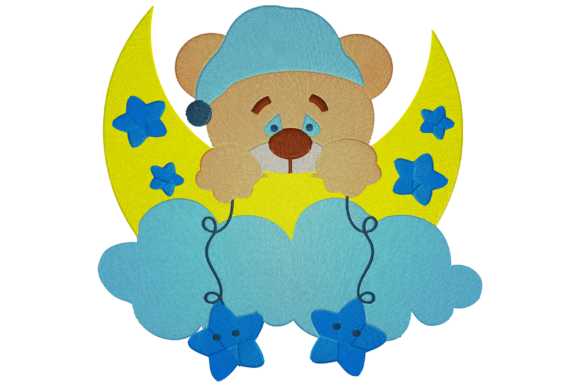
Bear Goodnight: A Designer’s Holiday Review
As an embroidery designer who spends countless hours digitizing and testing patterns, I approach every new file with a critical eye. We are not just looking for pretty pictures; we are looking for sellable assets that perform well on the machine and resonate with customers during the high-stakes holiday season. When I first loaded the Bear Goodnight embroidery design into my software, my immediate reaction was one of warmth. This is not a loud, chaotic pattern. It is quiet, cozy, and deeply nostalgic. For those of us building seasonal collections for babies and families, this specific aesthetic is gold.
The design features six distinct colors, which immediately tells me that thread management will be key. However, the payoff is a rich, dimensional look that stands out against flat prints. The fact that it is digitized by hand suggests a level of care in the stitch paths that automated converters simply cannot match. In this review, I will break down how this digital embroidery file fits into a modern shop’s holiday strategy, where it shines, and where you need to proceed with caution.
The Emotional Appeal of Seasonal Embroidery
Holiday shopping is driven by emotion. Customers are not just buying a pillow or a sweatshirt; they are buying a feeling of comfort, tradition, and love. Bear Goodnight taps directly into this psyche. The imagery evokes bedtime stories, warm blankets, and the gentle transition from day to night. For an Etsy seller or small shop owner, this emotional hook is vital. It transforms a standard item into a handmade gift that feels personal and thoughtful.
When I visualize this design on a product, I see it working exceptionally well for nursery decor and children’s apparel. The category of Babies is highly competitive, but designs that offer a sense of calm and security always perform well. This is not just cute; it is soothing. That distinction matters when parents are scrolling through hundreds of listings looking for the perfect personalized gift for a newborn or a toddler’s first Christmas.
Versatility Across Product Lines
One of the strongest attributes of this design is its adaptability. Because it is available in six sizes, you can scale it to fit various hoops without losing integrity. Here is how I would deploy this across a seasonal product drop:
- Sweatshirt Embroidery: Place the design on the left chest of a cream or oatmeal-colored crewneck. The six colors will pop beautifully against neutral fabrics, creating a premium, boutique look.
- Pillow Cover Accents: Use the largest size for a central placement on a linen or velvet pillow cover. This becomes an instant heirloom piece for a child’s room.
- Kitchen Towel Embroidery: A smaller version works wonderfully on flour sack towels. These are low-cost items with high perceived value when embroidered, making them perfect add-ons for gift bundles.
- Tote Bag Design: Canvas totes are huge for holiday markets. The sturdy fabric handles the stitch density well, and the design adds a whimsical touch to a practical item.
- Embroidered Patch: If you have the capability, stitching this onto felt or twill to create an iron-on patch allows customers to customize their own jackets or bags later.
For apparel decorators, the potential for family matching sets is significant. Imagine a large version on a parent’s hoodie and a scaled-down version on a child’s onesie. These "mini-me" sets are social media magnets and drive higher average order values.
Technical Considerations for the Machine Embroidery Design
While the aesthetic is charming, we must discuss the technical execution. A six-color design requires patience. You will need to manage thread changes efficiently to keep production times reasonable. Before you commit to a large batch of finished products, you must test the stitch density. Hand-digitized designs are generally superior, but every fabric reacts differently.
I strongly advise testing on both light and dark fabrics. The thread colors chosen for the preview may need adjustment if you are stitching on navy or black garments. You might need to swap a dark brown for a lighter tan to ensure visibility. Additionally, pay close attention to the hoop size requirements for each of the six available sizes. Ensure your machine can accommodate the largest version if you plan to use it on pillows or tote bags.
Stabilizer choice is non-negotiable here. For stretchy garments like sweatshirts, use a cut-away stabilizer to prevent puckering over time. For woven items like kitchen towels or pillow covers, a tear-away might suffice, but always test first. The goal is a crisp, clean finish that survives repeated washing. Nothing kills customer trust faster than a design that distorts after the first laundry cycle.
Navigating Challenges in Production
There are specific scenarios where you should use Bear Goodnight carefully. Small hoop sizes can sometimes crowd detailed elements. If you are using the smallest size for a baby hat or a tiny ornament, zoom in on your digitizing software. Check for tiny lettering or fine details that might merge together when stitched out. If the design includes any text, ensure it remains legible at smaller scales.
Also, consider the fabric texture. Thick, plush towels can swallow smaller stitches. If you are doing kitchen towel embroidery, you might need to adjust the pull compensation or use a topping stabilizer to keep the stitches sitting on top of the loops. Similarly, avoid placing this design on curved caps unless you have extensive experience with cap frames, as the multi-color nature increases the risk of registration issues on curved surfaces.
Maximizing Sales with Visual Marketing
Once you have mastered the stitching, the next step is presentation. In the digital age, your printable mockup is just as important as the physical item. Create realistic mockups that show the texture of the thread. Show the design in situ: a bear sleeping on a pillow next to a nightlight, or on a sweatshirt held by a child in a cozy setting.
For your Etsy listings, highlight the fact that this is a commercial embroidery friendly file (always confirm the specific license terms provided with your purchase). Buyers love knowing they are supporting small businesses that use high-quality, hand-digitized assets. Use keywords like holiday embroidery, seasonal embroidery, and digital embroidery file to capture search traffic.
Social media previews should focus on the process. Time-lapse videos of the machine stitching the six colors are incredibly engaging. They demonstrate the quality and effort involved, justifying the price point of your small shop product. Show the before and after: the blank garment versus the finished, embroidered piece.
Final Verdict for Holiday Collections
The Bear Goodnight embroidery design is a strong contender for any holiday collection focused on comfort and family. It balances playful charm with a sophisticated, handcrafted feel. By paying attention to the technical details—stabilizer, thread choice, and hoop size—you can produce items that look professionally made and feel luxurious to the touch.
Remember, success in seasonal sales comes from consistency and quality. Use this design to build a cohesive line of products that tell a story. Whether it is a tote bag design for holiday shopping or a pillow cover for nursery decor, this pattern has the versatility to meet various customer needs. Just ensure you check the specific file formats and license terms included with your download to guarantee compliance for commercial use. With careful planning and precise stitching, this design can become a staple in your holiday inventory, driving both sales and customer satisfaction.