Digital Camera Redwork: A Designer’s Craft Fair Review
As an embroidery designer who has spent countless weekends behind a craft fair table, I have learned that not every machine embroidery design translates into a bestseller. Some designs are technically perfect but visually quiet, while others have a quirky charm that stops customers in their tracks. Today, I am reviewing Digital Camera Redwork, a design that sits at the intersection of nostalgia and modern minimalism. For those of us running small businesses, whether we are Etsy sellers or boutique makers, understanding how a specific motif performs in the real world is crucial. This review focuses on practical application, visual appeal, and production viability for your next market day.
First Impressions: Nostalgia Meets Minimalism
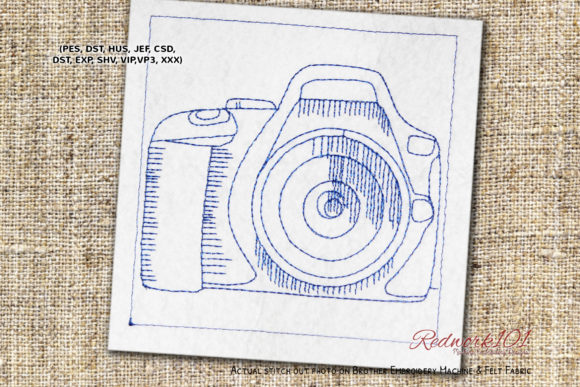
The first thing that strikes me about Digital Camera Redwork is its clean, graphic nature. Redwork, by definition, relies on a single thread color against a neutral background, creating a striking contrast that feels both vintage and contemporary. The subject matter—a digital camera—evokes a specific era of the late 90s and early 2000s, tapping into the current trend of Y2K aesthetics and analog nostalgia. It does not feel overly rustic or strictly farmhouse; instead, it feels playful, slightly ironic, and undeniably cool.
For a craft fair booth, this mood is essential. You want items that spark conversation. A customer might see this design and immediately share a story about their first point-and-shoot camera. That emotional connection is what converts a browser into a buyer. The simplicity of the line work ensures that the design is understood at a glance, which is vital when people are walking past your table quickly.
Product Versatility and Placement
When evaluating a new embroidery file, I always ask: where does this look best? Digital Camera Redwork is incredibly versatile because of its scalable nature. Here is how I envision it performing across different handmade product categories:
- Tote Bags and Market Bags: This is perhaps the strongest application. A large-scale version of the camera centered on a natural canvas tote creates a bold statement piece. It serves as an excellent tote bag design for photographers, students, or anyone who appreciates retro tech.
- Aprons and Tea Towels: For kitchen textiles, the redwork style shines. An apron embroidery placement on the bib or pocket adds a whimsical touch without being overwhelming. Similarly, tea towel embroidery benefits from the single-color approach, as it remains crisp even after repeated washing.
- Embroidered Patches: Because the design is likely composed of clear outlines, it makes for a fantastic embroidered patch. Patches are high-margin small shop product items that are easy to display and ship. The distinct shape of the camera allows for a clean cut line.
- Caps and Beanies: Placing this on the front of a dad hat can work, but caution is needed regarding the curved surface. The design must be small enough to avoid distortion but large enough to remain legible.
In terms of Work and professional presentation, this design fits well into a cohesive collection. If your brand leans towards creative arts, photography, or retro vibes, Digital Camera Redwork reinforces that identity. It acts as a strong visual anchor in your design assets portfolio.
Production Practicalities for the Busy Maker
From a production standpoint, speed and consistency are key to maintaining profitability at craft fairs. Redwork designs are generally faster to stitch than full-fill satin or complex photo-realistic designs. This means you can produce more units in less time, improving your inventory turnover. However, there are technical considerations to keep in mind before you start batch production.
The product description notes that "The Box Stitch shown in picture is optional" and that "The color of outer Box is different color in most of the designs unless it is part of the design itself, you can skip the color directly in." This flexibility is a double-edged sword. On one hand, it allows you to customize the look. On the other hand, it requires you to make a deliberate choice. If you skip the box, ensure the camera outline stands alone effectively. If you include it, choose a thread color that complements the redwork without clashing. For a classic look, sticking to a single red thread for the entire design often yields the most premium result.
Regarding stitch density, redwork typically uses lower density, which is gentle on lightweight fabrics. However, you must pay attention to fabric texture. On textured towels or thick denim, the thin lines might get lost or appear uneven. Always test on your intended material. If you are using a digital embroidery file for the first time, check the hoop size requirements. Ensure your machine can accommodate the largest version of the design if you plan to make large totes.
Visual Appeal and Customer Engagement
Why does this design sell? It comes down to visual clarity and perceived value. In a crowded marketplace, busy designs can sometimes look chaotic from a distance. Digital Camera Redwork offers a clean silhouette that reads well from ten feet away. This immediate recognizability draws customers in. Once they are closer, the quality of the stitching becomes apparent. Clean lines and consistent tension signal high-quality Embroidery, justifying a higher price point.
Furthermore, this design photographs beautifully for online listings. Whether you are creating a printable mockup for your Etsy shop or taking photos for Instagram, the high contrast of red on white or cream provides excellent visual pop. It helps your craft fair product stand out in a digital feed, driving traffic to your physical booth or online store.
Designer Notes and Careful Use
Before you commit to a large run, here are my top recommendations for ensuring success with this design:
- Test on Scrap Fabric: Never skip this step. Check how the red thread interacts with your specific fabric color. On dark fabric, red may not provide enough contrast unless you use a brighter shade or add a underlay.
- Stabilizer Selection: Even though redwork is light, using the correct stabilizer is non-negotiable. A cut-away stabilizer is best for stretchy fabrics like t-shirts, while tear-away works for woven totes and towels.
- Check Details: Look closely at the lens and buttons of the camera design. Are the gaps between stitches too wide? If so, you may need to adjust your tension or digitizing settings to prevent fabric show-through.
- Commercial Licensing: Always confirm the license terms of your digital embroidery file. Ensure you have the right to sell finished products commercially. This protects your business and respects the original designer’s work.
- Create Real Mockups: Before listing, stitch one sample on each product type you intend to sell. Compare them side-by-side to see which looks most balanced. Sometimes a design that looks great on paper needs slight resizing for a cap versus a pillow cover.
In conclusion, Digital Camera Redwork is a strong contender for your upcoming season. It balances aesthetic appeal with production efficiency, making it a smart choice for commercial embroidery ventures. By paying attention to fabric choice, thread contrast, and placement, you can turn this simple design into a standout item that resonates with customers who love nostalgia, photography, and handmade quality. Keep your booth display clean, let the redwork speak for itself, and watch as this retro icon finds a new home in the hands of happy customers.