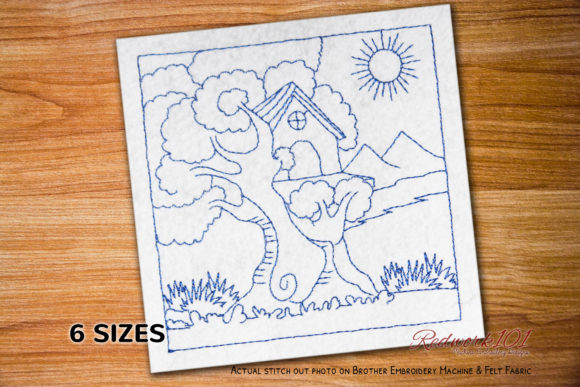
Tree House Embroidery: A Designer’s Review for Boutique Sweatshirts
As an embroidery designer who has spent years digitizing and testing files for small clothing brands, I approach every new machine embroidery design with a critical eye. It is not just about whether the file runs smoothly on the machine; it is about how that design translates into a tangible, sellable handmade product. Recently, I had the opportunity to test the Tree House design for a limited drop of premium sweatshirts. This piece, categorized under Fairy Tales, offers a whimsical yet structured aesthetic that requires careful consideration when applied to apparel. Here is my professional breakdown of how this design performs in a real-world boutique setting.
First Impressions and Design Aesthetic
The first thing that strikes you about Tree House is its narrative quality. It does not scream for attention with loud, chaotic lines; instead, it invites the viewer into a quiet, storybook moment. The layout suggests a blend of rustic charm and playful imagination, making it an ideal candidate for brands focusing on cozy, seasonal apparel. When I loaded the digital embroidery file into my software, the stitch path appeared logical, though the visual impact relies heavily on execution.
The mood is distinctly decorative yet minimal enough to fit modern trends. It feels feminine without being overly frilly, and playful without losing sophistication. For a boutique brand aiming to evoke nostalgia or comfort, this design hits the mark. However, the optional Box Stitch mentioned in the product description is a crucial element. In most variations, the outer box uses a different color to frame the central motif. As a designer, I appreciate this flexibility. You can skip the color directly in your software if you prefer a cleaner, more integrated look, or keep it to create a patch-like effect that pops against the fabric.
Performance on Sweatshirt Fabrics
Choosing the right canvas is half the battle in sweatshirt embroidery. I tested Tree House on several fabric types to gauge its versatility. On neutral, heather-grey sweatshirts, the design felt grounded and classic. The texture of the fleece provided a soft backdrop that allowed the stitches to stand out without looking harsh. However, on dark fabrics like navy or charcoal, contrast became the primary concern. If the thread colors are too muted, the details get lost in the shadow of the fabric pile. I recommend using slightly brighter or metallic threads to ensure the fairy tale elements remain visible.
Pastel-colored hoodies presented a different challenge and opportunity. Here, the design felt incredibly cute and fresh, appealing to a younger demographic or those seeking spring-ready styles. The key was managing the stitch density. Sweatshirts are thick, and if the density is too high, the fabric puckers around the hoop area. If it is too low, the backing shows through. Tree House seemed to handle medium-weight fleece well, but for oversized, heavy-duty hoodies, I would advise using a cut-away stabilizer to support the weight of the stitches over time.
Placement and Branding Strategy
For an Etsy seller or small shop owner, placement dictates perceived value. I found that Tree House works exceptionally well as a left-chest logo on standard hoodies. At this size, it acts as a subtle brand identifier, perfect for customers who prefer understated elegance. However, do not go too small. The intricate details of the tree structure need space to breathe. If the hoop size is too restricted, the finer lines may merge, reducing readability.
For a bolder statement, consider placing the design on the back of an oversized sweatshirt. This transforms the garment from basic loungewear into a standout fashion piece. In this context, the optional box frame becomes more important, providing a structured boundary that keeps the design looking intentional and polished. This approach is excellent for creating limited-edition drops where exclusivity drives sales. When photographing these items for your online store, ensure your printable mockup or actual lifestyle photos highlight the texture of the embroidery. Buyers need to see the raised quality of the stitches to justify a higher price point.
Technical Considerations for Production
Before running a full production batch, there are practical concerns every commercial embroidery operator must address. First, verify the specific file formats included in your purchase. While most modern machines read DST, PES, or JEF files, ensuring compatibility saves hours of troubleshooting. Since the product description notes that the outer box color is often different, you must decide whether to treat it as a separate color stop or merge it. This decision affects your thread change frequency and production time.
Stabilizer choice cannot be overstated. For knit fabrics like sweatshirts, a soft cut-away stabilizer is non-negotiable. It provides permanent support that prevents the design from distorting after multiple washes. I also recommend testing the wash durability on a sample garment. Check for thread breakage or fabric pulling around the edges of the Tree House motif. If the design feels stiff or board-like after washing, your tension may be too tight, or the density may need adjustment in your editing software.
Another critical factor is the fabric texture. Fleece and French terry have different piles. On high-pile fleece, you might need a topping material to prevent the stitches from sinking into the fabric. This ensures that the final product looks crisp and professional, rather than fuzzy and undefined. Always hoop your fabric tightly but without stretching it out of shape, as stretched knits will shrink back and cause registration issues in the embroidery.
Enhancing Brand Identity and Value
Integrating a unique design like Tree House into your collection does more than just decorate a garment; it builds brand identity. For creative entrepreneurs, consistency in design theme helps customers recognize your work. If your brand leans into storytelling, nature, or whimsy, this embroidery file reinforces that narrative. It signals to buyers that you care about detail and quality, fostering trust and encouraging repeat purchases.
Moreover, custom apparel featuring exclusive designs commands a higher market value. A plain sweatshirt is a commodity; a sweatshirt featuring a carefully placed, high-quality Tree House embroidery is a curated item. This distinction allows small businesses to compete with larger retailers by offering uniqueness and craftsmanship. Use this design to create cohesive sets, perhaps pairing the hoodie with matching tote bags or caps, utilizing the same design assets across different products.
Final Verdict for Small Business Owners
In conclusion, Tree House is a versatile and charming addition to any Fairy Tales themed collection. It balances playful imagery with a structured layout that suits both casual and premium apparel markets. Whether you are an experienced decorator or a home-based crafter, this design offers enough flexibility to adapt to various styles, from minimalist chest logos to bold back prints.
Remember to check the specific technical details such as exact stitch count and recommended hoop size before starting your run, as these were not explicitly provided in the brief description. Test your thread colors against your chosen fabric swatches to ensure optimal contrast. With proper stabilization and thoughtful placement, Tree House can become a signature element of your brand, driving engagement and elevating your finished product. Embrace the creative possibilities, and let this design bring a touch of magic to your next boutique launch.